What did I just watch!
When I first saw the poster for Main Vapas Aaunga, I went, "Ah, Imtiaz is back. But why Vedang and Sharvari?" I didn't follow much of the promotional run that followed. But when it finally released, two friends told me I mustn't miss it, and that I had to watch it on the big screen. These are the same two I've had long, passionate debates with about Lootera being one of Bollywood's most underrated gems, so the recommendation carried real weight. A week passed, but I was determined to catch it in theatres. When I finally went to book tickets, I found they were selling out fast. By the time we got to the theatre, it was packed. A film running purely on word of mouth – this had to be good, right? And boy, Vedang does not disappoint. Even with this heavy star cast, the two people that carry this through and through are Vedang and Naseeruddin Shah.
Here are ten things that stayed with me, and will likely continue to, long after watching Main Vapas Aaunga.
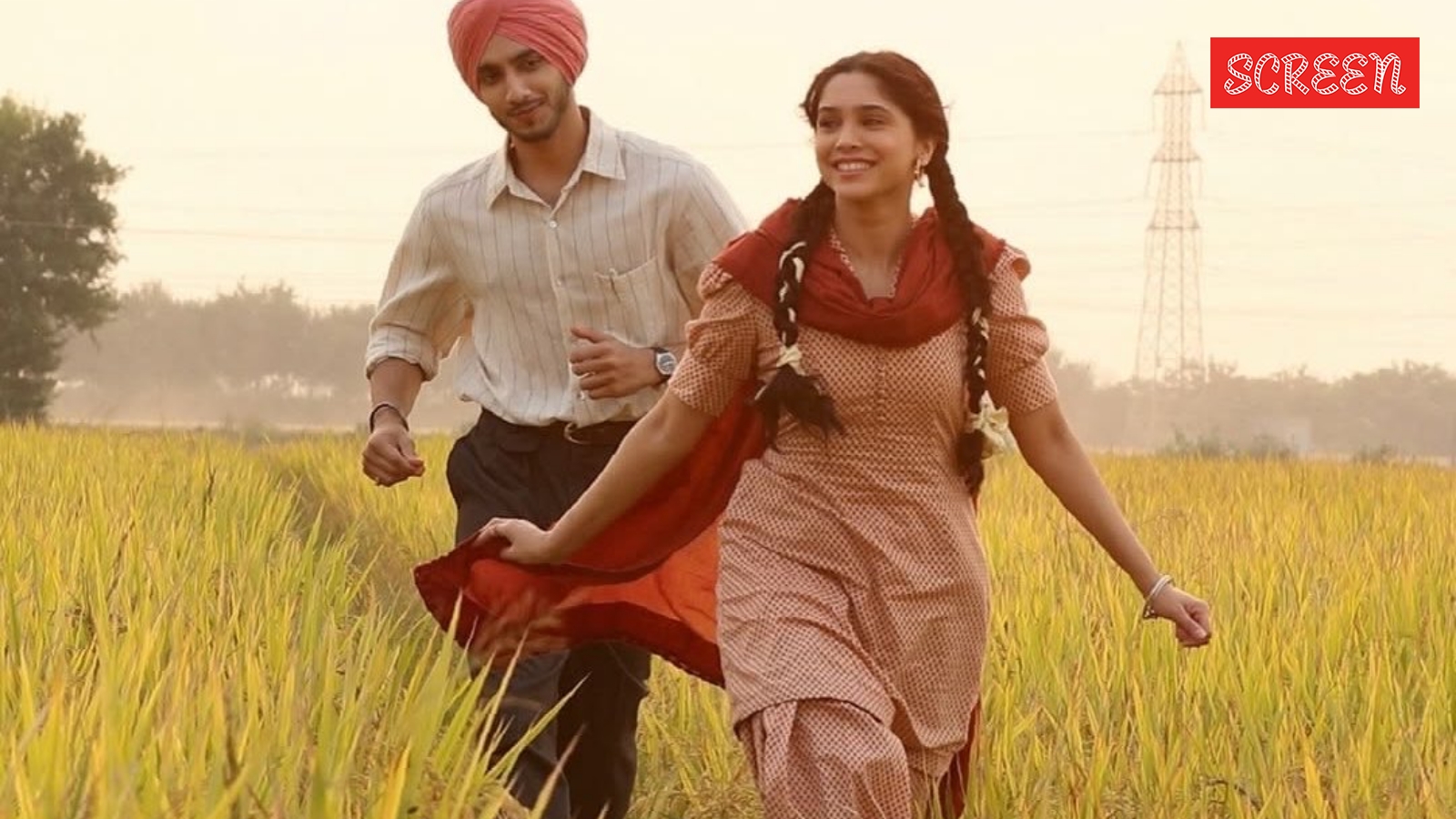
1. Angst. Imtiaz Ali has never been a novice at showing us emotion in the most relatable, real way – case in point: Rockstar, Tamasha, Love Aaj Kal. The thread that carries this film through isn't Partition itself, isn't the horror of that night, isn't even the heavily communal hue most Partition films get trapped in. It's angst. The incompleteness of a love story, trapped in time. At 95, Grewal wants to go back to Sargodha and tell Jiya his poem. He spends a lifetime pining for her, filling notebooks with poetry he never delivers. That angst breaks you.
2. The lack of anchoring in a refugee's life. I'm half Sindhi, half Konkani. My Sindhi family has been my only true family growing up. My closest aunt, who raised me like a mother, would tell me about our village in Sindh. My grandparents didn't leave in the mass exodus of Partition they left a few years earlier. Some of my oldest relatives were born in Sindh and spoke fondly of their life there. They told me of a pinga, a kind of swinging bed, where the family would lounge and watch the fields after a hearty meal. They told me of imported cars, of fine leather bags and crystal their parents brought back from business trips across the world. Many of them left overnight to rebuild their lives in India, but carrying that heavy memory of the world they'd left behind, they never quite found an anchor here. They passed away without ever going back, without ever getting that warm goodbye to the place they were born and raised in. I've looked up our village on Google Earth, on maps – it exists, it is real. It's forbidden to me, but it's where my family came from, and it likely holds its own stories of laughter, mirth and family, like any other place would.
3. The fragility and uncertainty of life in that era. When the Partition plan was announced, it was met first with disbelief. Of course they can't force us to choose a country. Of course we can decide where we want to stay. Of course they won't separate us. But then, suddenly you're not allowed to casually cycle into the non-Hindu side of Punjab. Suddenly you're packing your life into a single bag, hiding in wells, trying to stay alive long enough to reach the train station and get out of the place you called home.
4. The reality of how it panned out. History books taught us that Pakistan gained independence on the 14th of August, and India on the 15th. Does everyone remember the date of Partition? Does everyone remember how the borders were drawn, or who drew them? Did they make sense? No. The illogical planning, and even worse execution, of that plan shocks you and reminds you how inhuman war and colonisation can be.
5. The flashback structure. The ease with which the film slips into flashback and comes right back to the present day is commendable. It never feels choppy, incongruous or confusing. You become just as invested in what really happened as the grandson is. You wait with bated breath to see if there's a reunion, or even just one last look, at the end.
6. Death becomes ordinary, once you've seen enough of it. After the night the train sets off for Amritsar, Grewal has seen so much death: so many murders and beheadings that when his own father passes, he'd rather go to work and return for the funeral than sit and mourn. He says, "Hum refugee hai, humari shok manaane ki aukaat nahi hai." It hits you hard; hits you that the men of that generation had it brutally hard, and that their mental state would likely depress a therapist today. They saw too much. It hardened them, made them harsher parents, made them less loving. They suffered so much that no other suffering came close – choice of spouse, choice of education, family conflict, none of it seemed worth addressing next to what they'd endured. Was it a valid excuse? No. Was it hard? Yes.
7. The raw, real relationships in the present day. An ageing, not-particularly-loving 95-year-old parent, suffering and swinging between life and death, keeps his 65-year-old children on tenterhooks and they don't feel only love for him, but also an impatience to simply move on with their lives. This is no Karan Johar film, where the whole family camps out at the hospital, prays at the hospital Ganesha idol, and keeps vigil for Dadaji. This is hard-hitting and real; it sits with the grudges the children carry, but eventually shows you how they're also rooting for him, knowing he suffered through all the days he lived, and that he deserves a peaceful, complete death. I'd like to believe they forgave him, and thought kindly of him, after that intensely emotional last scene.
8. The one earring. The past is introduced through Jiya's search for a single lost earring; it ends with Grewal identifying her, decades later, from a portrait because she's wearing only one earring in it. Did she pine for him as much as he did? Did she know that even if he found her, or only the portrait remained, she wanted there to be something specific, something recognisable, to remind him that this was his Jiya? The simplicity, the innocence, of that one prop broke me.
9. The women. The women who got on the train suffered the loss of home, community, and loved ones and were then forced to rebuild lives, raise children in an unfamiliar land, and live with husbands haunted by the ghosts of Partition. But the women left behind, because it was too dangerous to get on the train, had it worse. The grandmother who cries and begs to leave with the men of the family eventually takes it upon herself to protect the honour of the young girls in her care when the atrocities begin. The frozen frame where the women are leaving, and one turns to wave at the men, breaks your heart in a way you can't quite explain because you know something terrible is about to happen, and you also know there was no good solution here. Nobody knew right from wrong. Everyone was just trying to keep their family safe, knowing there was never a best case outcome.
10. Whether love like this is even possible today. There's bound to be conversations about whether a yearning, a love like this, is possible at all now. In an age of situationships, instant messaging and social media, it's easy to forget how precious a single photograph once was. One forgets how you could go days without a single glimpse of your lover, and how, strangely, that distance and emptiness kept you connected. This is touched upon through the grandson's present-day relationship, but it lingers, and keeps you thinking. It reminds you of how you fell in love, how you felt consumed by that warm, fuzzy feeling and nothing else mattered. It really knocks you out, the moment the two present-day lovers turn to each other and say, "I want to be loved like this."
There are always films that make you cry, make you laugh, make you talk about them at work and with friends. But every few years, a film comes along that hits you deep inside, that lodges itself in you like a memory of a time that existed long before you did. It may not define you, but it intrigues you, not as trivia, but for the way it reframes how you think about your lineage, your forefathers. Main Vapas Aaunga is a watch for anyone with a heart, anyone willing to let themselves feel deeply and love fiercely.

No comments:
Post a Comment